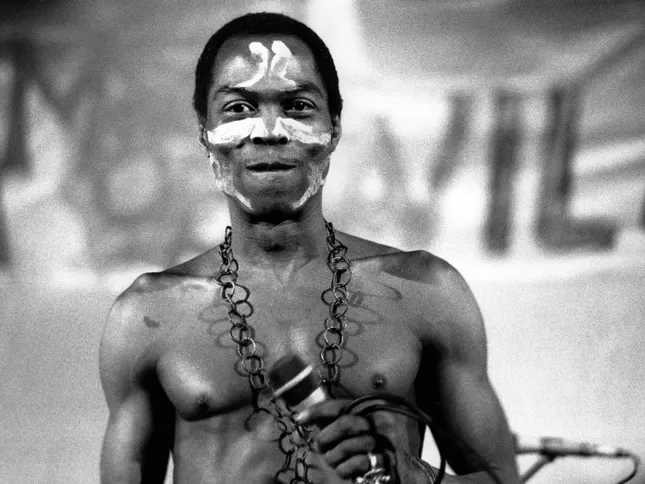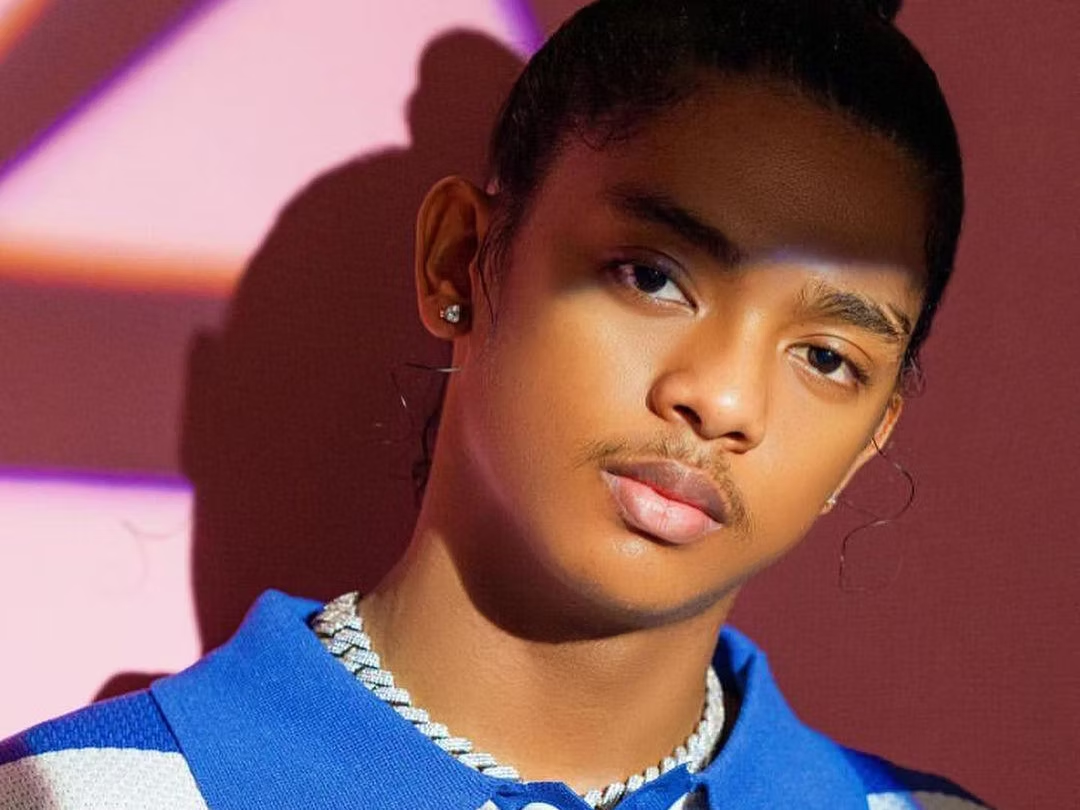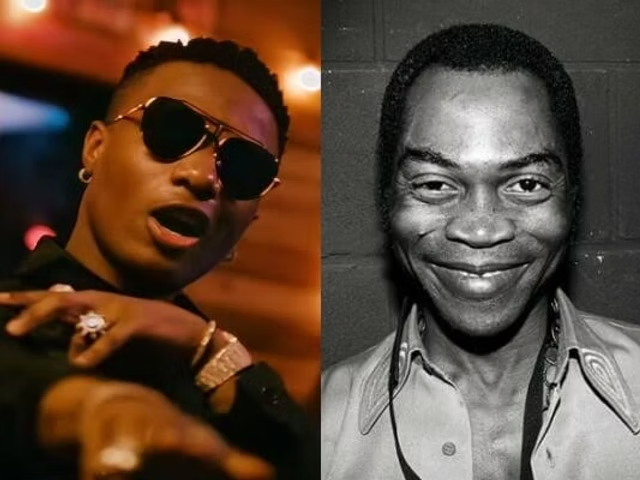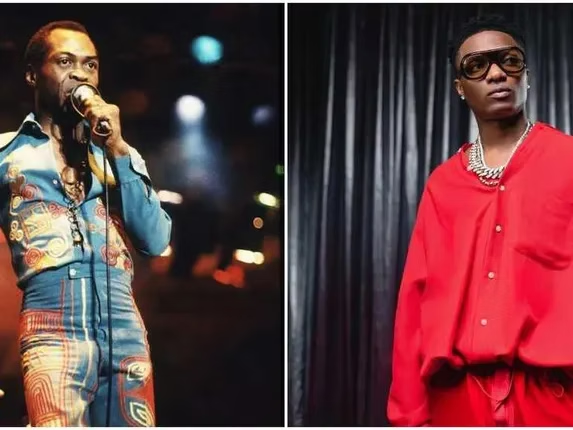
Every few years, Africa finds a new way to ask the same question just dressed in trendier clothes. Today, it sounds like: “Is Wizkid bigger than Fela?” On the surface, it looks like a harmless music debate. Fanbases clash, timelines explode, insults fly, and everyone thinks they’re defending culture. But beneath the noise, this question exposes something deeper and more uncomfortable: our growing inability to distinguish between popularity and power, fame and impact, numbers and legacy.
The Case for Wizkid: The Global Superstar
Let’s get one thing straight immediately: Wizkid is undeniable. Wizkid (Ayo Balogun) is arguably one of the most successful African artists of all time. His global reach is historic:
- Sold-out arenas from London to Los Angeles.
- International awards (Grammys, BETs, Billboard recognitions).
- Streaming numbers that place African music firmly on the world stage.
- Collaborations with global icons like Drake, Beyoncé, and Justin Bieber.
This matters. Afrobeats’ rise did not happen by accident, and Wizkid’s role in that story is secure. He built bridges that didn’t exist before. He made it possible for the next generation to dream of stadiums, not just street corners.
Anyone pretending otherwise is either dishonest or emotional. Wizkid represents the commercialization and globalization of African sound.
The Case for Fela: The Phenomenon
But acknowledging Wizkid’s success does not automatically make the comparison to Fela accurate and that’s where the conversation collapses.
Fela Anikulapo Kuti was never competing in the same lane. He was not chasing:
- Global approval.
- Chart dominance.
- Brand partnerships.
Fela’s music was political resistance, social commentary, and direct confrontation with power. He challenged military governments. He exposed corruption in plain language (pidgin English so the common man could understand). He paid for it with arrests, beatings, bans, and exile. His influence was not measured in applause but in consequence. When Fela walked into a room, governments got nervous. When Wizkid walks into a room, brands get excited.
One is an artist. The other is a movement.
Why “Bigger” is the Wrong Question
Here is the core problem: We are using the wrong ruler. Comparing Wizkid and Fela by streams or stadium sales is like comparing a speedboat to a submarine. They both move through water, but they operate on completely different levels.
Fela’s Metrics: Political change, cultural revolution, philosophical impact (Afrofuturism, Black consciousness), and the creation of an entire genre (Afrobeat).
Wizkid’s Metrics: Global market share, playlist additions, tour revenue, and cultural export.
One created the language. The other translated it for the world.
The Bigger Problem in Africa
So why do we keep asking this question? Because it reveals a dangerous trend:
We are confusing visibility with value. In the age of social media, we are obsessed with what we can count likes, streams, followers, dollars. We struggle to measure what we cannot see influence, sacrifice, and ideological weight.
If we continue down this path, we will raise a generation that values the celebrity over the sage. We will prioritize the artist who trends for a week over the thinker whose ideas last a century.
Here is the mature perspective that most people miss:
- Africa needs its Felas to push the culture forward morally and politically.
- Africa needs its Wizkids to push the culture forward economically and globally.
- Without Fela, the soul of the music might have been silenced by oppression.
- Without Wizkid, the sound of the music might not have reached the world.
They are not rivals. They are chapters in the same story.
If you’re still asking “who is bigger,” ask yourself:
Bigger at what? By whose standards? And why does that metric matter to you?
Fela’s legacy is that he died standing for something, and his shrine still stands as a pilgrimage site for lovers of truth.
Wizkid’s legacy (in progress) is that he took that sound and showed the world that Africa can compete on the global stage.
One is the root. The other is the branch. Don’t insult the root because you love the fruit.
This debate isn’t really about Wizkid or Fela. It’s about how we define greatness in Africa.
Do we value impact or income? Do we honor legacy or likes? Can we celebrate both without tearing one down?