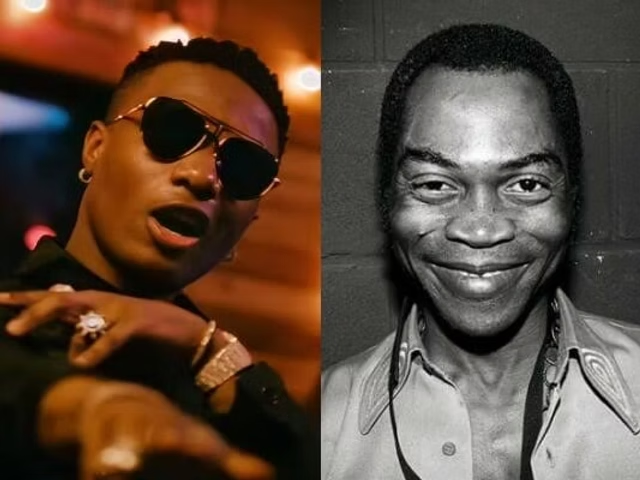
The argument for Wizkid being “bigger” is not entirely wrong it’s just incomplete. In today’s world, visibility is currency. Numbers feel objective. Streams, awards, sold-out shows, social media reach, and international recognition have become the primary way we measure success. By these standards, Wizkid dominates. He exists in a globalized industry where African artists can now headline festivals, collaborate with the biggest names in music, and be celebrated without having to leave their identity behind.
Why Fela Was Never Meant to Be “Bigger” in That Way
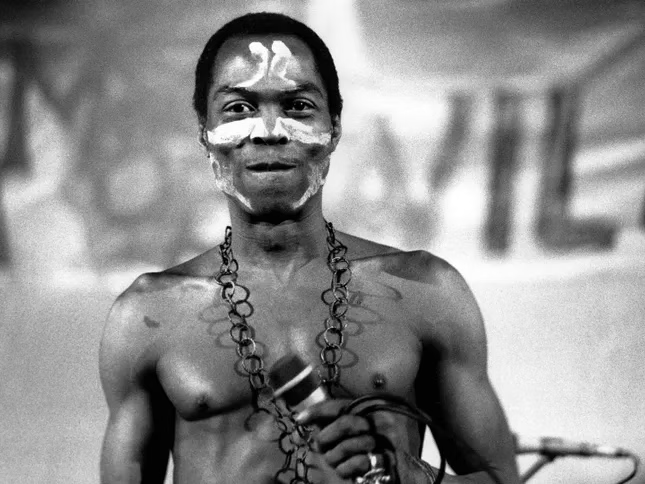
Fela’s influence cannot be understood through popularity alone because popularity was never his goal. He existed in an era where speaking openly could get you imprisoned or killed, not just “canceled.” His music named names, mocked authority, and directly challenged military regimes at a time when fear was a governing strategy. The price he paid was real: constant surveillance, repeated arrests, physical violence, and the destruction of his home and community.
Unlike modern artists who can separate their art from politics, Fela’s life and music were inseparable from resistance. His audience did not just dance they listened, learned, and in many cases, became politically conscious through his work. Afrika Shrine was not simply a performance venue; it was a site of ideological formation. His influence seeped into activism, journalism, and pan-African thought in ways that cannot be charted or streamed.
This is why asking whether Wizkid is “bigger” than Fela misses the point. Fela was not building a career within a system he was confronting the system itself. His legacy exists outside of entertainment because his impact reshaped how Africans understood power, freedom, and identity. You cannot measure that with applause or monthly listeners.
The Bigger Problem This Debate Reveals
At its core, this debate reveals a deeper issue in how we now engage with history and influence in Africa. We have become so accustomed to measuring worth through visibility that we struggle to recognize forms of power that do not perform well online. We confuse being seen with being significant. As a result, figures whose contributions were structural, ideological, or revolutionary are constantly forced into comparisons that strip their work of context.
This mindset doesn’t just affect music debates it shows up in politics, leadership, religion, and social movements. We elevate charisma over competence, fame over substance, and virality over vision. The Wizkid-Fela argument is simply the most recent example of this pattern, not its cause.
Wizkid and Fela are not rivals. They are reflections of two different Africas: one navigating global visibility and creative freedom, the other fighting for survival, dignity, and self-definition. Both matter. But only one of them had to risk everything just to speak.
Why People Think Wizkid Is Bigger
The argument for Wizkid being “bigger” is not entirely wrong it’s just incomplete. In today’s world, visibility is currency. Numbers feel objective. Streams, awards, sold-out shows, social media reach, and international recognition have become the primary way we measure success. By these standards, Wizkid dominates. He exists in a globalized industry where African artists can now headline festivals, collaborate with the biggest names in music, and be celebrated without having to leave their identity behind.
For many young Africans, this visibility carries emotional weight. Wizkid represents validation. He is proof that African talent no longer needs Western approval to succeed and when it does receive it, it can still remain culturally rooted. To a generation raised online, where success is quantified in real time, it feels natural to declare him “bigger” than anyone who came before. This isn’t ignorance as much as it is a reflection of how the internet has trained us to understand value.
The problem begins when these modern metrics are treated as universal truths rather than context-specific tools. Fame today is amplified, accelerated, and algorithmically rewarded. The louder the applause, the more “important” someone appears. But history does not operate on algorithms, and impact is not always visible in numbers. When we apply digital-age logic to pre-digital figures, we flatten complexity and erase the conditions that made their influence dangerous, costly, and enduring.
Why Fela Was Never Meant to Be “Bigger” in That Way
Fela’s influence cannot be understood through popularity alone because popularity was never his goal. He existed in an era where speaking openly could get you imprisoned or killed, not just “canceled.” His music named names, mocked authority, and directly challenged military regimes at a time when fear was a governing strategy. The price he paid was real: constant surveillance, repeated arrests, physical violence, and the destruction of his home and community.
Unlike modern artists who can separate their art from politics, Fela’s life and music were inseparable from resistance. His audience did not just dance they listened, learned, and in many cases, became politically conscious through his work. Afrika Shrine was not simply a performance venue; it was a site of ideological formation. His influence seeped into activism, journalism, and pan-African thought in ways that cannot be charted or streamed.
This is why asking whether Wizkid is “bigger” than Fela misses the point. Fela was not building a career within a system he was confronting the system itself. His legacy exists outside of entertainment because his impact reshaped how Africans understood power, freedom, and identity. You cannot measure that with applause or monthly listeners.
The Bigger Problem This Debate Reveals
At its core, this debate reveals a deeper issue in how we now engage with history and influence in Africa. We have become so accustomed to measuring worth through visibility that we struggle to recognize forms of power that do not perform well online. We confuse being seen with being significant. As a result, figures whose contributions were structural, ideological, or revolutionary are constantly forced into comparisons that strip their work of context.
This mindset doesn’t just affect music debates it shows up in politics, leadership, religion, and social movements. We elevate charisma over competence, fame over substance, and virality over vision. The Wizkid-Fela argument is simply the most recent example of this pattern, not its cause.
Wizkid and Fela are not rivals. They are reflections of two different Africas: one navigating global visibility and creative freedom, the other fighting for survival, dignity, and self-definition. Both matter. But only one of them had to risk everything just to speak
If you’re still asking “who is bigger,” ask yourself bigger at what and why that metric matters to you.