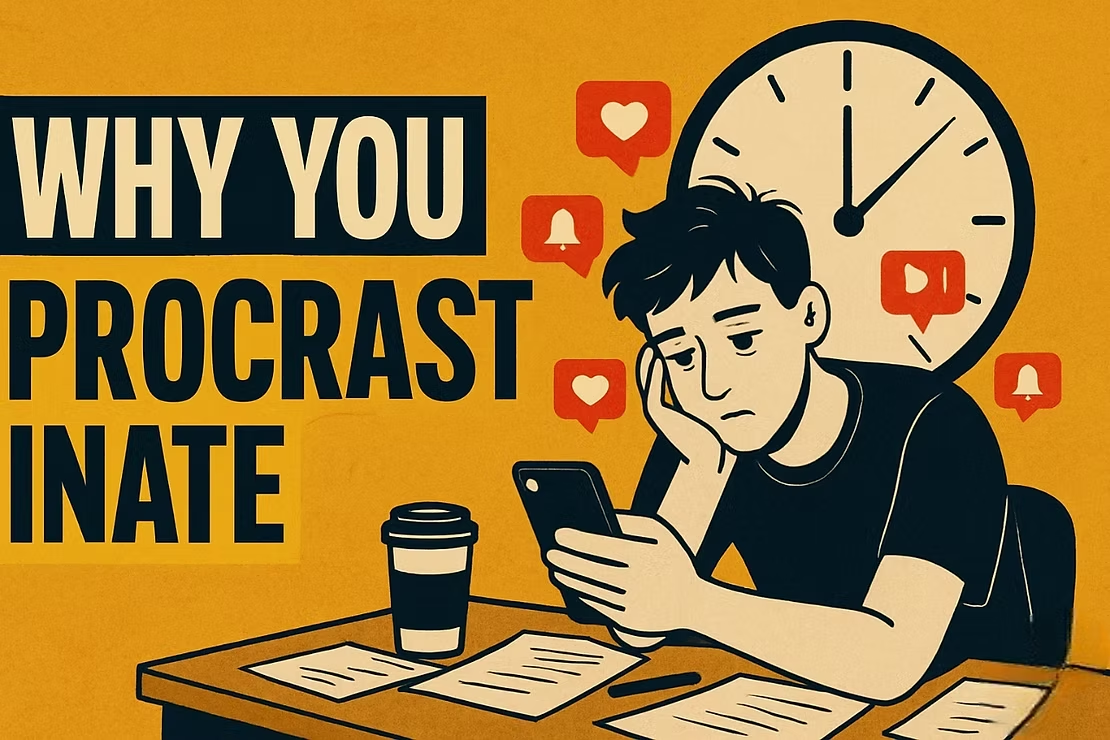
You’re not lazy. You’re not undisciplined. You’re not broken. But you can’t move. The emails sit unanswered. The dishes pile up. The projects you once cared about gather digital dust. And every night, you lie awake wondering: Why can’t I just do the things I need to do? If you’ve been searching for answers, you’ve probably landed on two possibilities:
- ‘Maybe I’m just lazy.’
- ‘Maybe I’m depressed.’
Here’s the truth that changes everything: They’re not separate questions. Depression and procrastination are deeply, painfully connected, and understanding that connection is the first step toward freedom. Let’s talk about it. No judgment. No toxic positivity. Just the truth.
The Link Nobody Talks About. We talk about depression as sadness. As crying; As “feeling blue.”
But for millions of people, depression doesn’t look like tears. It looks like emptiness. It looks like a couch they can’t get off of. It looks like a phone screen they stare at for hours while their to-do list mocks them from the other room.
Depression steals motivation before it steals happiness. Here’s what the research shows:
- Depression disrupts the brain’s reward system (dopamine pathways).
- Tasks that once felt satisfying now feel pointless.
- The effort required to start anything feels physically impossible.
- Concentration becomes foggy and unreliable.
- Self-worth plummets, making failure feel inevitable.
Now ask yourself: If starting a task feels pointless, exhausting, foggy, and doomed to fail why would anyone start? That’s not laziness. That’s depression.
The Vicious Cycle. Here’s where it gets cruel. The connection isn’t one-way. It’s a loop.
Step 1: Depression makes it hard to start things.
Step 2: You don’t start things. Tasks pile up.
Step 3: You feel guilty, ashamed, and worthless for not doing them.
Step 4: The guilt deepens the depression.
Step 5: Go back to Step 1.
This is the trap. Millions of people are trapped in it right now, calling themselves lazy, hating themselves for something that started as a symptom and became a prison. If this is you: Please keep reading. You’re not what you’ve been calling yourself.
Depression or ‘Just’ Procrastination? How to Tell
Not everyone who procrastinates is depressed. But if you’re wondering which one you’re dealing with, here are some questions to ask yourself:
With typical procrastination:
- You avoid the task but still enjoy other things (hanging with friends, watching shows, hobbies).
- The fear is specific to the task (fear of failure, perfectionism).
- Once you start, you usually feel better.
- The guilt passes once the task is done.
With depression-driven procrastination:
- You avoid Even things you used to love.
- Nothing feels enjoyable or worth the effort.
- Starting feels physically impossible, like wading through mud.
- The guilt doesn’t pass. It’s constant, heavy, and self-directed.
- You’re not just avoiding tasks you’re avoiding life.
If the second column sounds familiar, this isn’t a productivity problem. This is a mental health problem. And it needs a different kind of solution.
The Executive Function Breakdown. Here’s something most people don’t know: Depression doesn’t just make you sad. It impairs executive function the brain’s ability to organize, prioritize, and execute tasks. Think of executive function as your brain’s project manager. Depression fires that manager. Now you have:
- No prioritization:Everything feels equally urgent and equally impossible.
- No initiation:The starting line feels like a wall.
- No sustained attention:You start something, then immediately drift.
- No working memory:You forget what you were doing mid-task.
This isn’t a character flaw. This is a neurological symptom. And you can’t “discipline” your way out of a brain that’s struggling to function.
The Shame Spiral Must Stop. Here’s the most important thing I’ll say in this entire post: The shame you feel about not doing things is making everything worse.
When you call yourself lazy, you add self-hatred to executive dysfunction. Now you’re not just stuck you’re stuck AND convinced you’re a terrible person. That shame drains the tiny amount of energy your depression left you. The cycle tightens.
The only way out is to break the shame first. Before the tasks. Before the productivity. Before the to-do lists.
You have to forgive yourself for struggling.
Depression is an illness. You wouldn’t shame yourself for not running a marathon with a broken leg. Stop shaming yourself for not being productive with a broken brain.
What Actually Helps (Real Talk, Not Fluff). If depression is fueling your procrastination, here’s what actually helps. Not “just make a list.” Not “try harder.” Real strategies for real brains.
Shrink the Task Until It’s Embarrassing
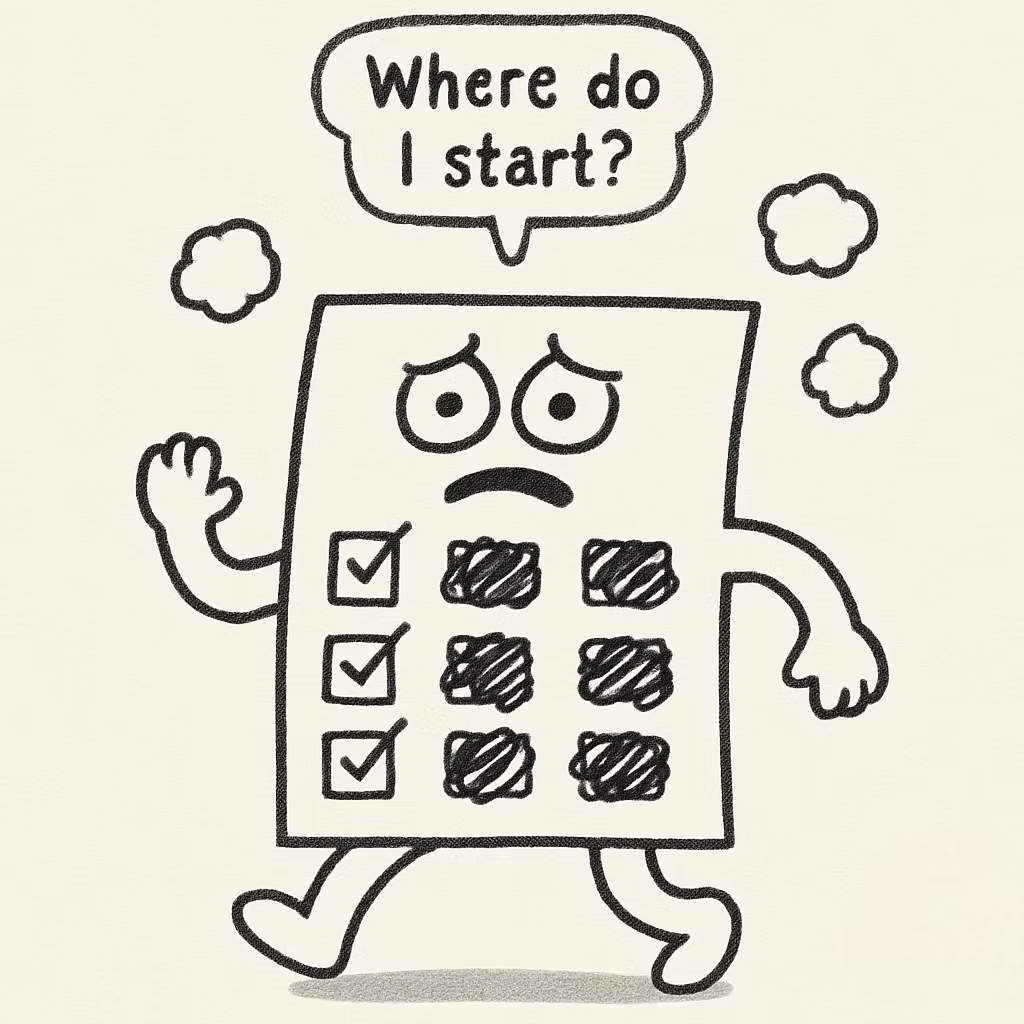
Your brain sees “clean the kitchen” and shuts down. Too big. Too many steps. Impossible. So shrink it until it’s laughable.
- Not “clean kitchen. ‘Just ‘put one dish in the sink.’
- Not “write report.” Just ‘open the document.’
- Not “answer emails.‘Just “open the email app.’
The goal isn’t to finish. The goal is to prove to your brain that starting is possible. Once you start, momentum sometimes carries you. If it doesn’t? You still did more than before.
Separate ‘Must Do’ from ‘Should Do’
Depression makes everything feel urgent. It doesn’t.
Write down everything on your mind. Then draw a line. On one side: things that actually have consequences if not done (pay bills, show up to work). On the other side: things that feel important but won’t actually hurt anyone if they wait (organizing the closet, responding to that non-urgent email).
Only do the “must do” list. Give yourself permission to let the “should do” list sit. The world won’t end. And you’ll have energy for what actually matters.
Body Doubling (Yes, It Works for Depression Too)
Remember body doubling from the ADHD post? It works here too. Have someone sit with you while you do things. Not helping. Just existing. A friend on FaceTime doing their own work. A family member reading in the same room. A “study with me” livestream on YouTube. The presence of another person creates a gentle accountability that can bypass the depression paralysis. You’re not alone. You’re not failing alone. And sometimes, that’s enough.
Stop Tying Worth to Productivity
This is the deep work. Somewhere along the way, you learned that your value as a human depends on what you produce. Depression latches onto that belief and weaponizes it against you.
Here’s the truth you need to internalize: You are worthy of love, rest, and existence regardless of what you do today. Your to-do list is not your moral report card. You are not a better person when you’re productive or a worse person when you’re struggling. You’re just a person. Like all of us. Fighting a battle most people can’t see.
Get Help (Seriously)
If depression is making it hard to function, you deserve more than blog posts. You deserve professional support.
- Therapy:A good therapist can help you untangle the shame and build real strategies.
- Medication:For some people, medication corrects the brain chemistry that makes starting impossible. There’s no shame in this.
- Support groups:Connecting with others who understand reduces the isolation.
You don’t have to figure this out alone. You really don’t.
Depression and procrastination aren’t just connected. For millions of people, they’re the same battle. The paralysis you feel? Symptom. The self-hatred you carry? Symptom. The inability to start? Symptom.
You are not lazy. You are not broken. You are struggling with something real, and it deserves real compassion.
The tasks will be there when you’re ready. The world won’t end if you rest. And the shame you’ve been carrying? It was never yours to hold. Start with one thing today. Not the whole list. Just one tiny, embarrassingly small thing. And when you do it? Don’t minimize it. Celebrate it. You moved. That’s everything.
This one is tender. I know. But we need to talk about it.
- Have you experienced this connection?
- What helps you on the hard days?
- What do you wish people understood about depression and procrastination?
Drop it in the comments. This is a safe space. No judgment. Just humans helping humans. And share this with someone who needs to hear it. You know who. Send it to them. Let them know they’re not alone, they’re not lazy, and they’re not what they’ve been calling themselves.